Stop Chasing Every Wiggle: Special Cause vs. Common Cause on the Plant Floor
By Mark Davidson, CEO
Every plant has a trend screen, and every trend screen moves. The hard question isn't whether a value changed — it's whether the process changed. Get that wrong and well-meaning people make things worse.
Two kinds of variation
Walter Shewhart and W. Edwards Deming gave manufacturing a simple, durable idea: variation comes in two flavors. Common-cause variation is the natural noise of a stable system. Special-cause variation is a signal that something specific has changed — a worn bearing, a new raw-material lot, a recipe edit.
Reacting to common-cause noise as if it were a signal is called tampering — and it reliably increases variation.
Most loss in a mature plant is common-cause. It shrinks only when the system itself changes. Special causes, on the other hand, demand investigation — fast, before they become scrap, a trip, or a customer complaint.
Why this is hard in practice
- Tags are named differently on every line and every site, so nobody is sure they're comparing like with like.
- Trends show a value without its process context — what's upstream, what batch, what shift.
- Investigations pull data from five systems by hand, and the answer arrives after the next shift has already changed something.
How DMI approaches it
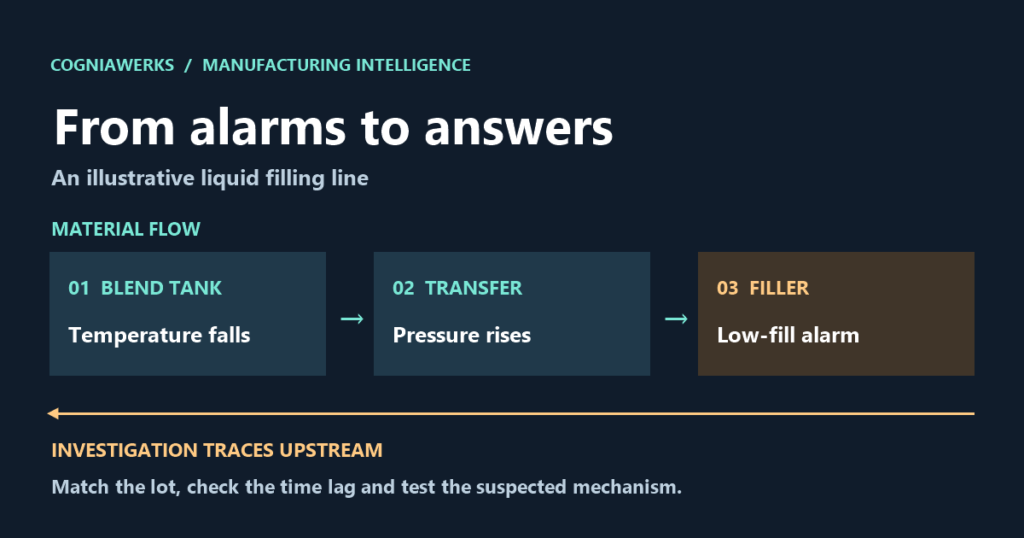
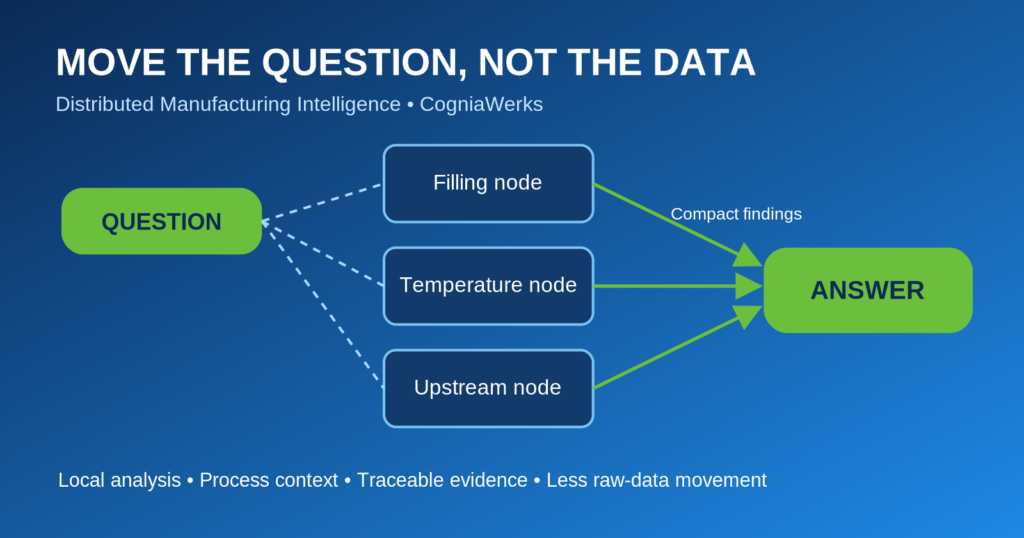
DMI builds a process-aware model of your plant, then applies statistical process control through that model. When a point falls outside control limits, DMI walks the process upstream to show which stages and signals moved first, correlates the event with maintenance, quality and production context, and lays out the evidence for an engineer to review.
Just as important, when a signal stays inside its limits, DMI says so — so your team spends its time on the problems that are real.
See DMI on your process
Book a tailored walkthrough with our team.