From Alarms to Answers: How Process-Aware AI Finds the Real Cause of Manufacturing Problems
By mdavidson
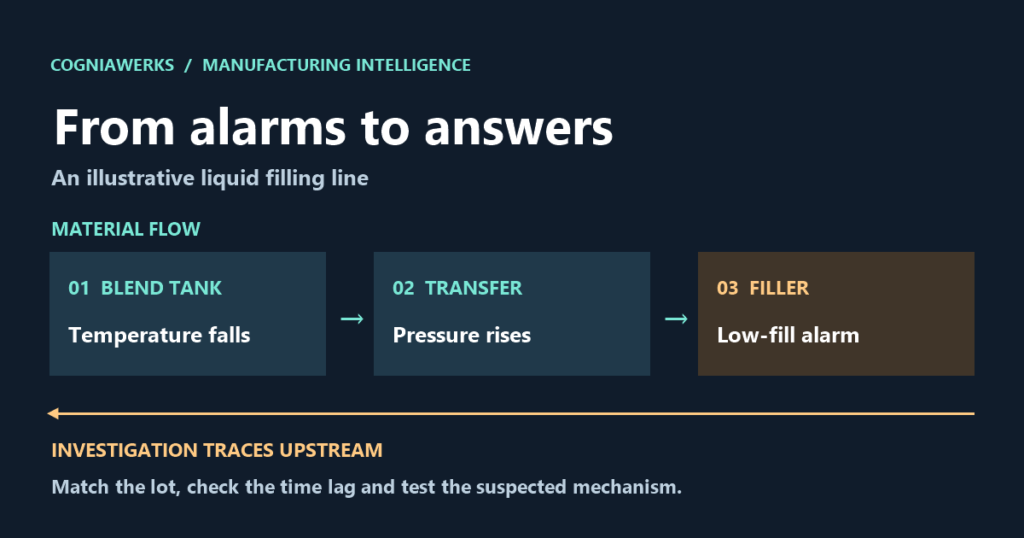
The filler trips a low-fill alarm. The operator follows the line’s response procedure and identifies the affected product. Then comes the question that decides whether the problem returns on the next shift. What changed before those bottles reached the filler?
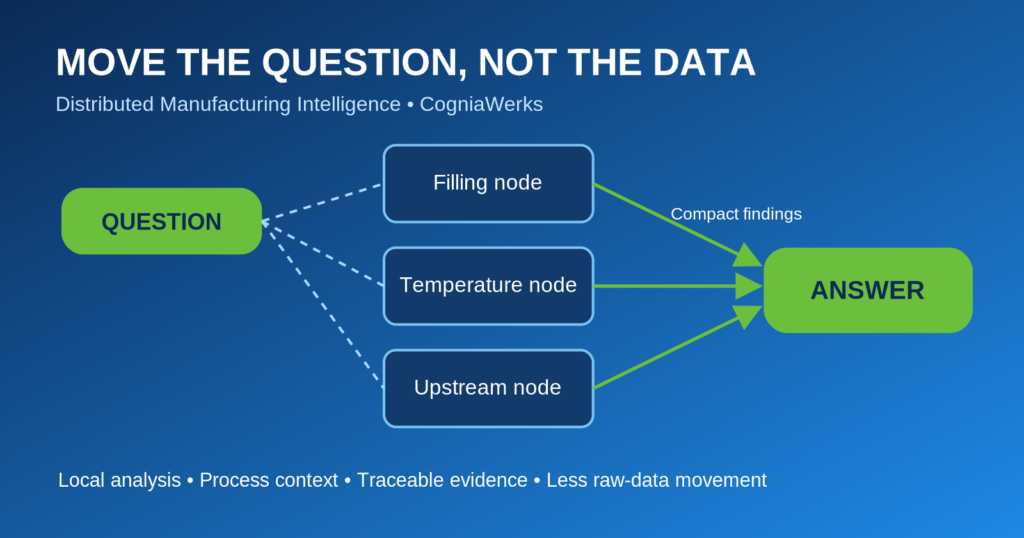
In Move the Question, Not the Data, we looked at how to investigate across plant systems while keeping raw data where it lives. The next question is what those systems need to know about the process to help a team find the cause.
The alarm tells you where to respond
An alarm calls attention to a condition that needs an operator response. A low-fill alarm is useful precisely because it tells the operator where to look and when to act. The investigation starts with a different question. Did the filler create the problem, or did it receive material it could no longer fill consistently? IEC 62682 describes the role of alarm systems in supporting operator response.
Follow the product upstream
Picture a liquid line with a blend tank, a transfer stage and a filler. In this fictional example, blend temperature falls. Transfer pressure rises while the pump runs at comparable speed. A few minutes later, bottles from the same lot start coming off the filler underweight.
A plausible explanation is that the cooler blend became more viscous and the filler received less product during each fill cycle. That depends on the formulation, the transfer system and how the filler controls each dose. A partly closed valve could also restrict flow. Nozzle fouling could produce low weights at particular heads. A checkweigher problem could make good bottles look underweight. The first signal to move is a lead worth testing.
What makes the investigation process-aware
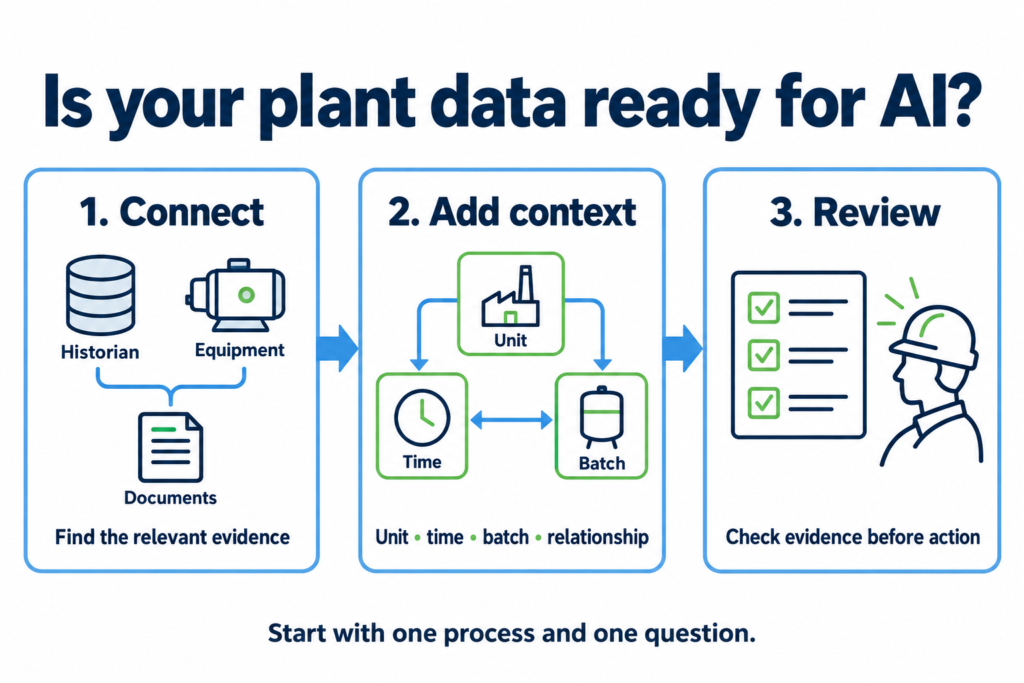
A plant can have every trend it needs and still struggle to compare the right readings. The historian records tank temperature and pressure. The manufacturing execution system records which lot ran and when. The checkweigher records individual weights. The maintenance system may hold the record of a valve adjustment. Each system tells part of the story.
A process-aware investigation uses the route the material took to decide which records belong together. It checks lot genealogy and equipment routing, accounts for hold-up in the transfer line, and reconciles clocks before ordering events. Where lots overlap or timestamps are uncertain, the finding should say so. ISA-95 provides common models and terminology for exchanging information between manufacturing control and enterprise functions.
The analysis can then compare the affected run with comparable runs of the same recipe and operating state. A control chart can flag a departure from expected variation and give the engineer a window to investigate. A statistically unusual reading still needs a process explanation. The NIST engineering statistics handbook explains how to interpret control-chart signals.
Give the team a finding it can check
For the filling line, start by confirming the weight loss with an independent check. Compare results by fill head, check the transfer valve position, and see whether the temperature and pressure sequence lines up with when the affected material reached the filler. If retained samples or approved test runs are available, check the suspected temperature–viscosity relationship under comparable conditions. If the temperature change explains the behavior, ask what made the blend cool in the first place. That next question can turn a plausible mechanism into a corrective action. ASQ’s fishbone guidance shows how to organize competing causes and identify where more data is needed.
A useful AI finding gives the reviewer the lot, time window, source records, leading explanation and evidence that could overturn it. Operations and quality decide what to verify, what to change and how to check whether the problem recurs through their established procedures.
Where CogniaWerks fits
CogniaWerks Distributed Manufacturing Intelligence (DMI) is designed to support this kind of investigation by bringing together plant data, process relationships and AI-assisted analysis alongside existing manufacturing and quality systems. The filling-line scenario illustrates the workflow. How far an investigation can go depends on the quality of the signals, the ability to trace the lot and the evidence the plant can collect. Explore the CogniaWerks platform.
The next time the filler alarms, start with the affected lot and work back through the stages it actually passed through. The value of process-aware AI is in making that trail easier for the team to follow and verify.
See DMI on your process
Book a tailored walkthrough with our team.